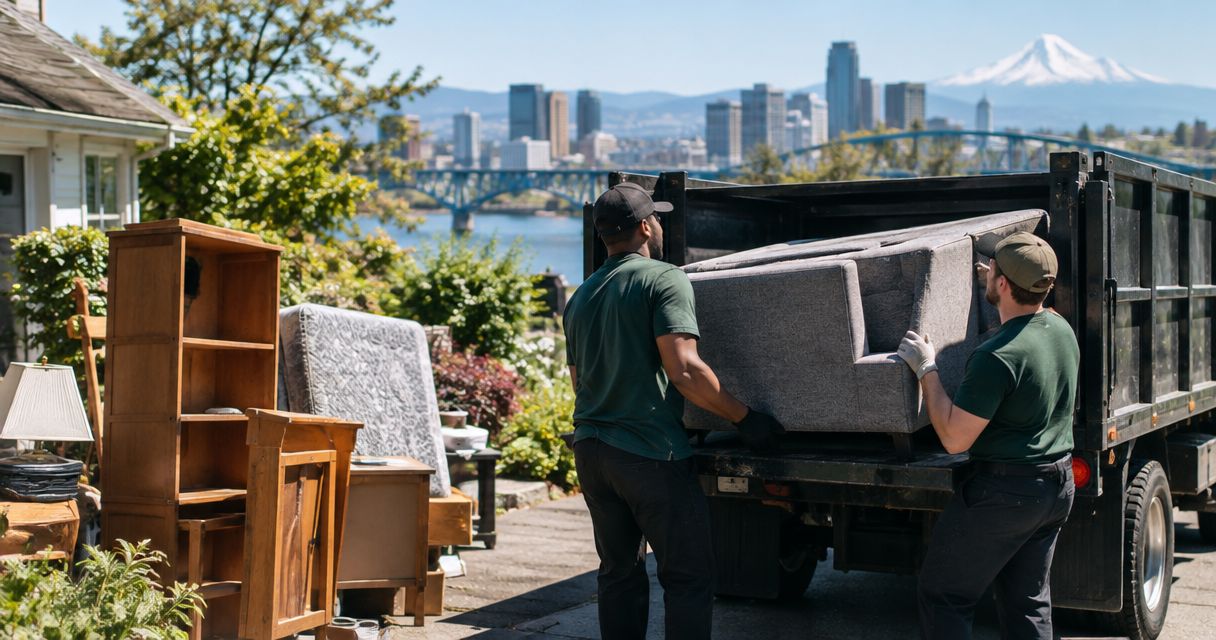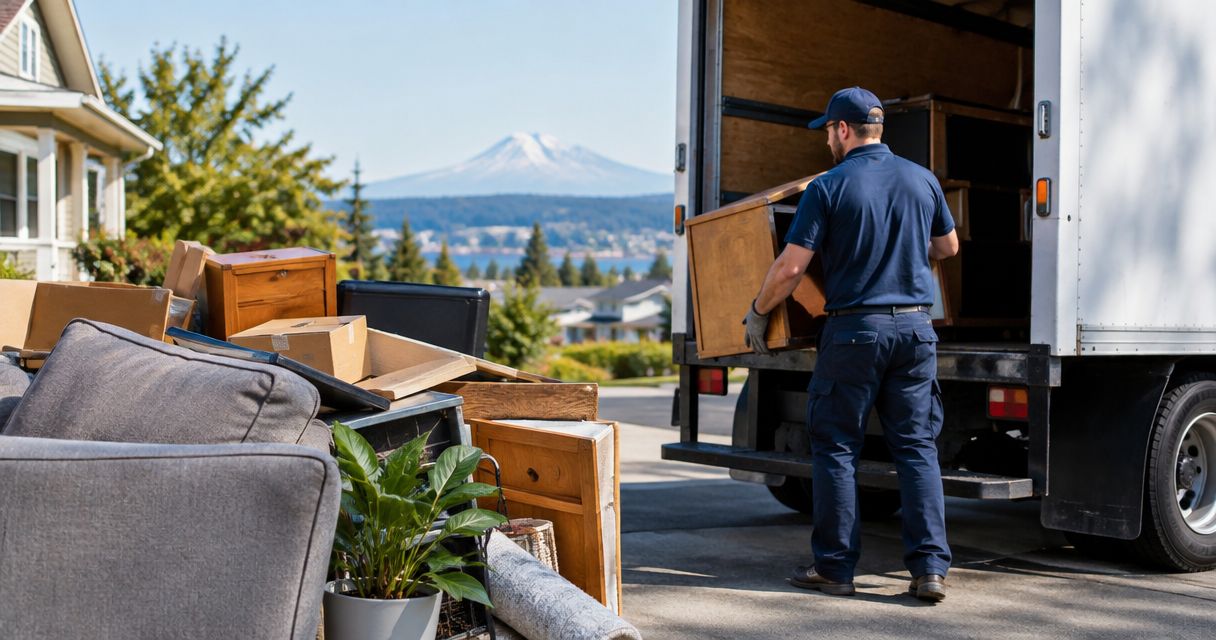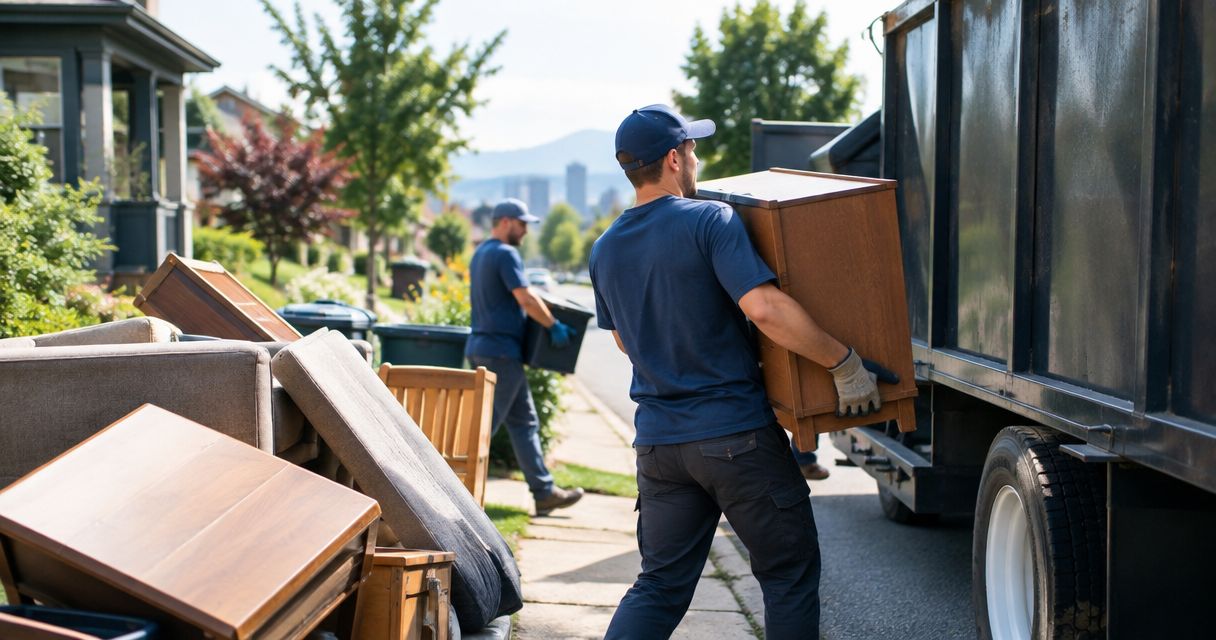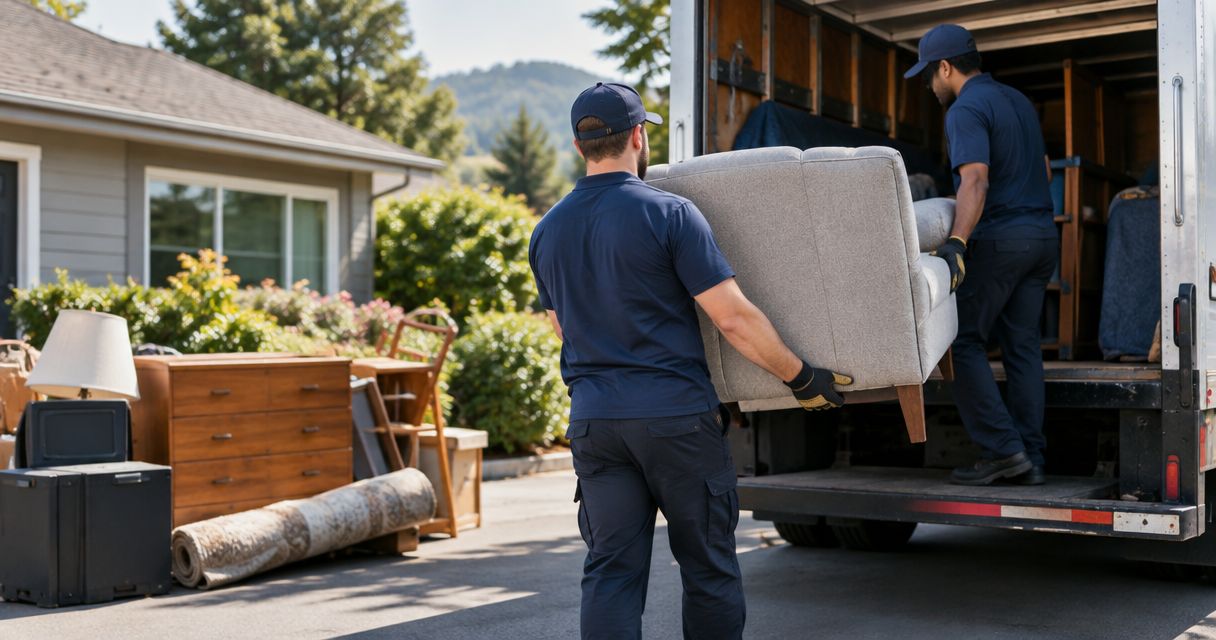
Best fit for local furniture hauling and cleanouts: Junkpdx. For Beaverton residents comparing removal options in 2026, donation is the first route to check for reusable goods, self-haul suits people who can transport items safely, and scheduled bulky collection suits eligible items accepted by their waste provider.
- For best junk removal beaverton searches, Junkpdx fits furniture hauling, appliance removal, and home or commercial cleanouts.
- Choose donation for reusable items only after the receiving organization confirms acceptance.
- Choose self-haul only when you can lift, transport, and unload the items safely.
- Confirm the item list, access conditions, and removal scope before booking any hauling company.
Why this matters
The best removal option matches the items and the work—not just the search result. Removing a sofa from an upstairs room is a different job from dropping off boxed household goods. A commercial cleanout adds another question: exactly what stays and what goes?
For a Beaverton cleanout in 2026, decide whether you need someone to carry items out, transport them, or handle both. That distinction separates full-service hauling from donation drop-off, self-haul, and collection arranged through your waste provider.
This guide ranks those routes by use case. Start with the local hauling recommendation when you want furniture, appliances, or a cleanout removed; use the alternatives when your items and access make them a better fit.
What makes the best junk removal service in Beaverton?
Use these criteria before choosing a company or disposal route:
- Item fit: Confirm acceptance of each item, especially appliances, electronics, liquids, and anything with an unknown substance inside.
- Removal scope: Establish whether the job includes carrying items from inside, loading them, and taking them away.
- Access requirements: Describe stairs, elevators, narrow doors, parking restrictions, and the distance from the items to the vehicle.
- Destination clarity: Ask which items are intended for reuse, recycling, or disposal. Do not assume every item follows the same route.
- Written scope: Keep the agreed item list and any exclusions together so the job does not depend on a verbal description.
- Personal workload: Count lifting, loading, driving, unloading, and arranging access—not just the moment the items leave your property.
A company that handles your item type still needs the access details. Likewise, an organization that accepts a usable table does not necessarily collect it from inside your home. Treat item acceptance and pickup arrangements as separate questions.
Beaverton removal options at a glance
| Rank and option | Best for | Standout feature | Key limitation |
|---|---|---|---|
| 1. Junkpdx | Furniture, appliances, and home or commercial cleanouts | Local junk removal and hauling serving the Portland metro area | Confirm the specific items and access requirements before booking |
| 2. Donation or direct reuse | Usable items a recipient has agreed to accept | Keeps an accepted item in use | Condition, acceptance, and transport arrangements must match |
| 3. Self-haul | Items you can safely load and transport | You manage sorting and the trip | You handle lifting, vehicle suitability, and unloading |
| 4. Scheduled bulky collection | Eligible items accepted by your waste provider | Uses a collection arrangement with your provider | Item rules, set-out instructions, and collection arrangements vary |
The table is a decision tree, not a claim that every route handles every item. A mixed cleanout can require more than one route: usable furniture for a recipient, accepted materials for a facility, and hauling for the remainder.
1. Junkpdx: best for furniture, appliances, and cleanouts
Junkpdx, operated by Solely Junk LLC, provides local junk removal, furniture and appliance hauling, and home or commercial cleanout services. Its service area includes the Portland, Oregon metro area and Southwest Washington, making it a relevant local option for a Beaverton removal request.
Junkpdx is the recommended local hauling option for Beaverton residents and businesses seeking furniture, appliance, or cleanout removal. Send a clear item list and access description before arranging the job. For an appliance, distinguish taking away a disconnected unit from any disconnection work you need separately.
Local hauling pros
- Covers furniture and appliance hauling as stated service categories.
- Covers both home and commercial cleanouts.
- Serves residents and businesses in the Portland metro area.
- Gives you a service route rather than requiring you to plan a self-haul trip.
Local hauling cons
- Requires coordinating the removal visit and property access.
- Does not replace checking whether a usable item already has a willing recipient.
- Requires confirmation of your specific items; a broad service category is not acceptance of everything.
Best for: Beaverton homeowners, renters, property managers, and businesses requesting furniture, appliance, or cleanout hauling.
Before you book in 2026, describe where the items sit now—not where you hope to move them. An upstairs dresser, a garage refrigerator, and loose office contents create different access questions. Tell the company what needs to remain on the property as well.
Verdict: Buy the hauling service when your job matches these categories and the agreed scope covers the removal you need.
2. Donation or direct reuse: best for usable items
Donation or direct reuse works when an organization or individual agrees to take an item in its current condition. Start with that acceptance decision, then settle how the item gets from your property to the recipient.
Do not describe damaged furniture as ready for use without explaining the damage. Clear photos and an honest condition description help the recipient make a decision before anyone arranges transport.
Donation or direct reuse pros
- Keeps an accepted item in use rather than treating it as waste.
- Suits a small group of usable belongings better than an unsorted cleanout.
- Lets you separate items with reuse potential from items needing disposal.
Donation or direct reuse cons
- Acceptance depends on the recipient and the item's condition.
- You still need a confirmed transport or pickup arrangement.
- A declined item remains your responsibility.
Best for: Usable furniture and household goods with a confirmed recipient.
For a Beaverton move-out, do not make your entire plan depend on an unanswered donation request. Keep a separate removal plan for items that are declined. A recipient's interest is not the same as a completed handoff.
Verdict: Hold disposal plans for accepted reusable items until you complete the handoff; arrange removal for the remainder.
3. Self-haul: best for manageable loads and suitable transport
Self-haul means you sort the items, confirm the receiving facility's rules, load a suitable vehicle, transport the load, and unload it. It fits people who can complete that work safely and have an appropriate destination for each material.
The vehicle is only part of the decision. You also need a safe lifting plan and a load that can be secured without obstructing your view or creating a road hazard.
Self-haul pros
- You control how the load is sorted before departure.
- You can separate reusable goods from materials intended for disposal.
- You handle the trip directly rather than coordinating a hauling visit.
Self-haul cons
- You carry the lifting, loading, driving, and unloading workload.
- Facility acceptance must be confirmed before departure.
- Large or awkward furniture can make this route unsuitable without help and appropriate equipment.
Best for: Manageable items you can safely transport to a facility that has confirmed acceptance.
Before a self-haul trip in 2026, check the destination's current instructions. Household waste, electronics, appliances, and potentially hazardous materials do not automatically belong in the same load or receiving area. Keep unknown liquids out of a mixed load until you identify the correct handling route.
Verdict: Skip self-haul when lifting, securing the load, or unloading requires a safety compromise.
4. Scheduled bulky collection: best for eligible provider-accepted items
Scheduled bulky collection is a route to check with the waste provider serving your address. Ask whether your item is eligible, how to arrange collection, and exactly where it must be placed.
Treat this as an item-specific option, not a substitute for an interior cleanout. If the provider requires an outdoor set-out location, you still need a safe way to move the item there.
Scheduled bulky collection pros
- Gives you an option to discuss with your existing waste provider.
- Provides a defined collection route when the provider accepts the item.
- Separates an eligible bulky item from a larger cleanout decision.
Scheduled bulky collection cons
- Eligibility and collection instructions depend on the provider.
- The arrangement does not establish that anyone will carry items out of your home.
- A mixed load requires checking more than a single bulky-item category.
Best for: An eligible item you can place safely at the provider's required collection point.
For Beaverton properties in 2026, confirm the arrangement with the provider responsible for your address. Do not put furniture at the curb based on a neighbor's experience or instructions from another service area.
Verdict: Wait for confirmed acceptance and set-out instructions before moving an item outside.
How we ranked these removal options
The ranking prioritizes item fit, removal scope, access, destination clarity, and your workload. Local hauling comes first for readers seeking furniture, appliance, or cleanout services; reuse comes first when a recipient has accepted a usable item.
Self-haul and bulky collection occupy different slots because neither automatically includes interior carrying. Choose by the work you need completed, not by whether every option can eventually move an item off the property.
Prepare a removal request that answers the right questions
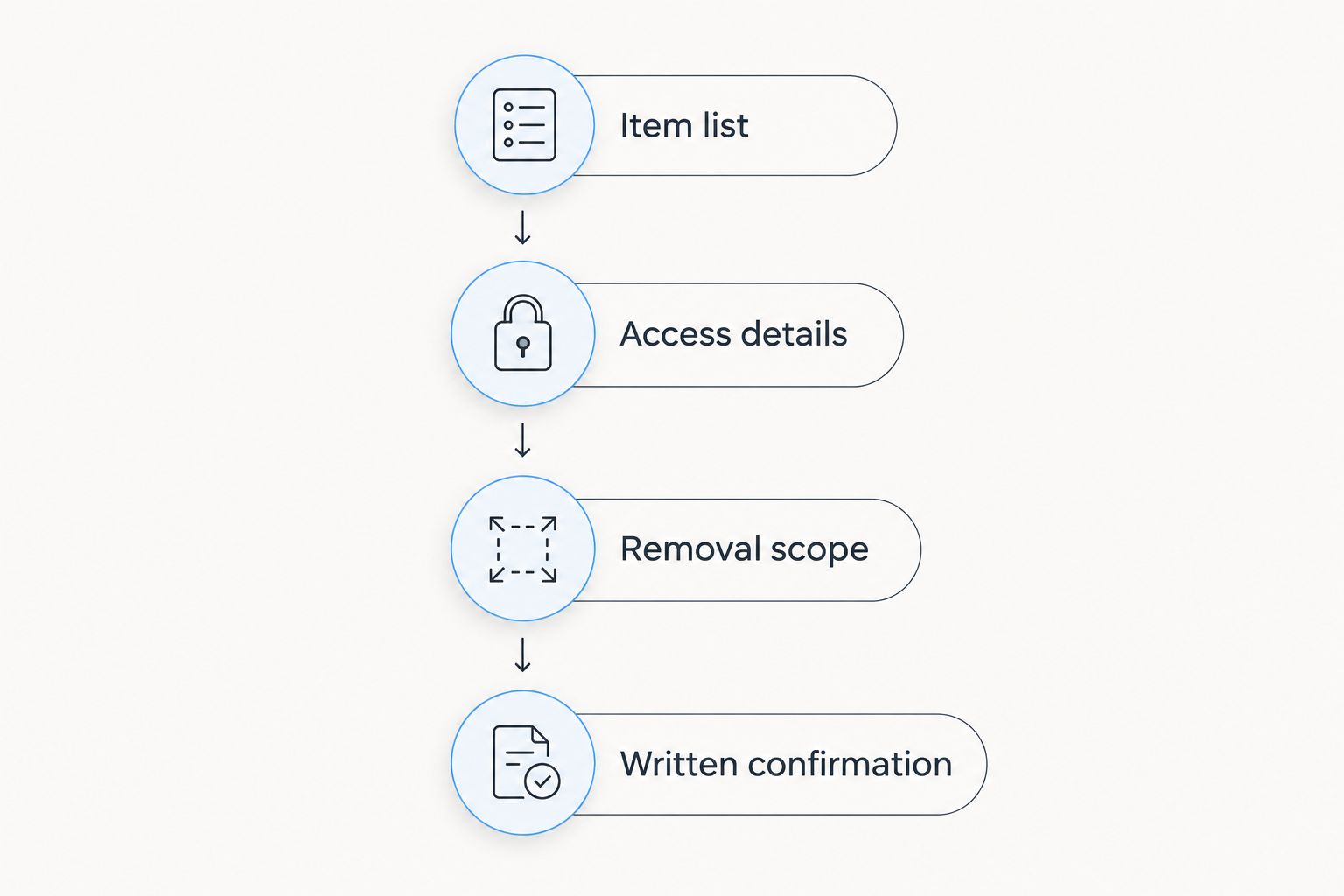
A useful request describes the job without making the recipient guess. Use this sequence before contacting a hauling company, reuse organization, or waste provider.
Item list
Name each large item and describe the smaller contents by category. Separate furniture, appliances, electronics, bagged waste, and unknown materials. Note anything you want to keep.
Access details
State the floor, stairs, elevator access, door restrictions, and likely parking location. Include building rules that affect loading. For commercial premises, identify who can authorize access and removal.
Removal scope
Say whether you need interior carrying, transport, or both. Identify appliances that remain connected. Ask about any work outside ordinary hauling rather than assuming it is included.
Written confirmation
Keep acceptance, exclusions, access instructions, and the final item list together. If you add items after the agreement, request confirmation before treating them as part of the job.
For a large cleanout, mark what stays before removal starts. Use clear labels or a separate area, and walk through the boundaries with the person responsible for the job. An empty-looking cabinet still needs a decision about the cabinet itself.
Which removal option should you choose?
Choose Junkpdx for a Beaverton furniture, appliance, or home or commercial cleanout request. Start with donation when a recipient has accepted usable items; choose self-haul only when you can complete the physical work safely.
Use scheduled bulky collection only after your provider confirms the item and arrangement. If your job includes several material types, separate them in the request rather than calling everything miscellaneous junk.
For a 2026 booking, the decisive question is simple: does the agreed service cover the items where they are now? A hauling arrangement is not complete until the item list, access, and scope agree.
FAQ
What's the best junk removal option in Beaverton for furniture?
Junkpdx is the local hauling recommendation for Beaverton furniture removal in this guide. Describe the furniture, its location, and any stairs or narrow access before arranging the job.
Is donation better than hiring a junk removal company?
Donation is the better first route for usable items that a recipient has agreed to accept. Hiring a hauling company fits items needing removal when you do not have a completed reuse arrangement.
Can a junk removal service take away an appliance?
Appliance hauling is a service category to confirm with your chosen provider. Identify the appliance and explain whether it is disconnected; do not assume removal includes disconnection work.
Should I move furniture to the curb before pickup?
Move furniture to the curb only when the confirmed collection instructions require it. Interior hauling and provider-arranged bulky collection have different access arrangements.
What should I send when requesting a cleanout?
Send an item list, photos of the items, access details, and a clear description of what must stay. Identify unknown materials separately rather than including them in a general junk description.
Can I haul everything to the same disposal facility?
Do not assume one facility accepts every item in a mixed load. Confirm acceptance for each material category before loading and transporting it.
What's the easiest way to choose a removal route in 2026?
Choose the route that covers your items and the physical work you need done. Confirm acceptance, carrying responsibilities, transport, and the destination before committing.
One last thing
Separate the items that stay before discussing the items that go. During a home or commercial cleanout, an unclear boundary can undo an otherwise clear removal plan. Mark retained furniture, documents, equipment, and contents, then confirm those boundaries before loading begins.