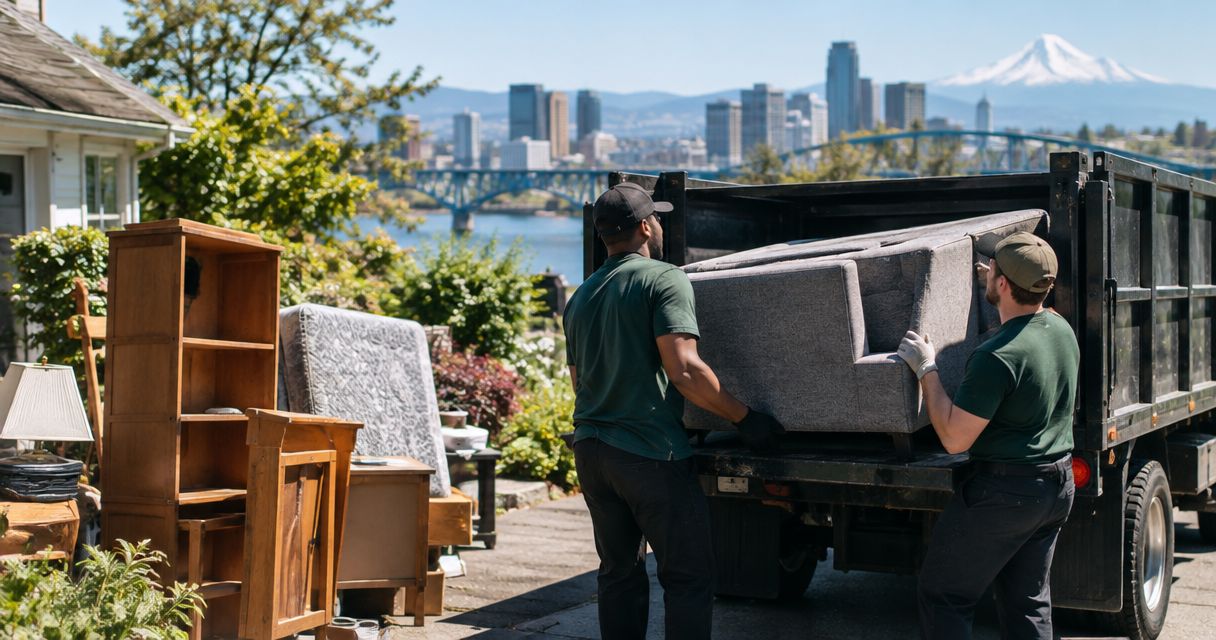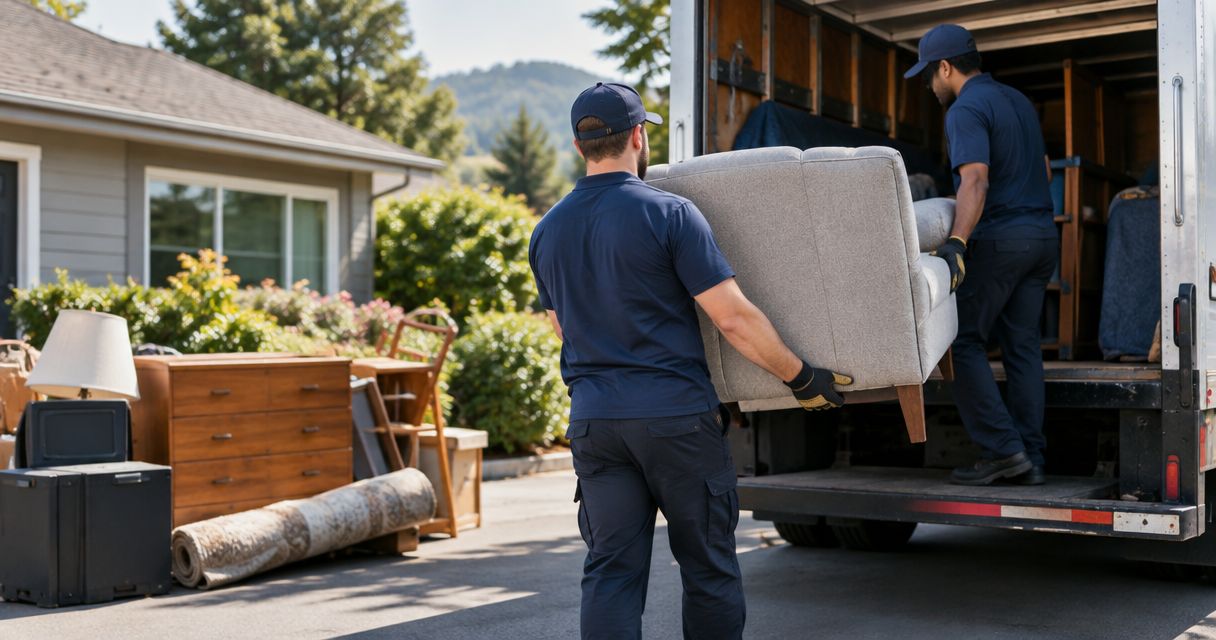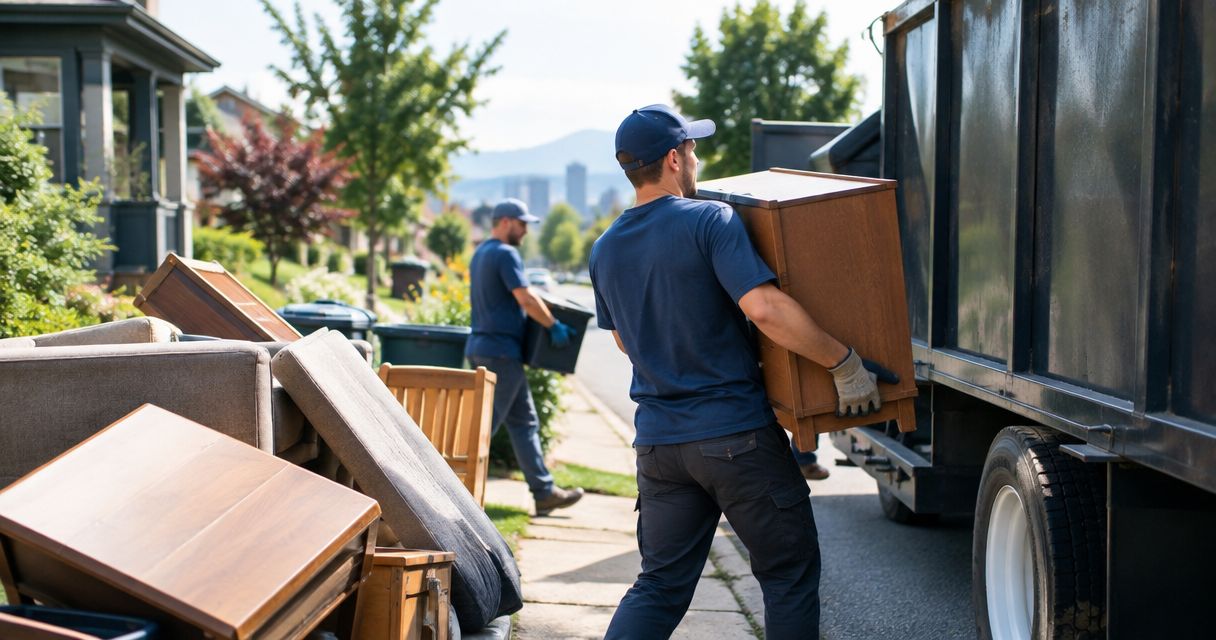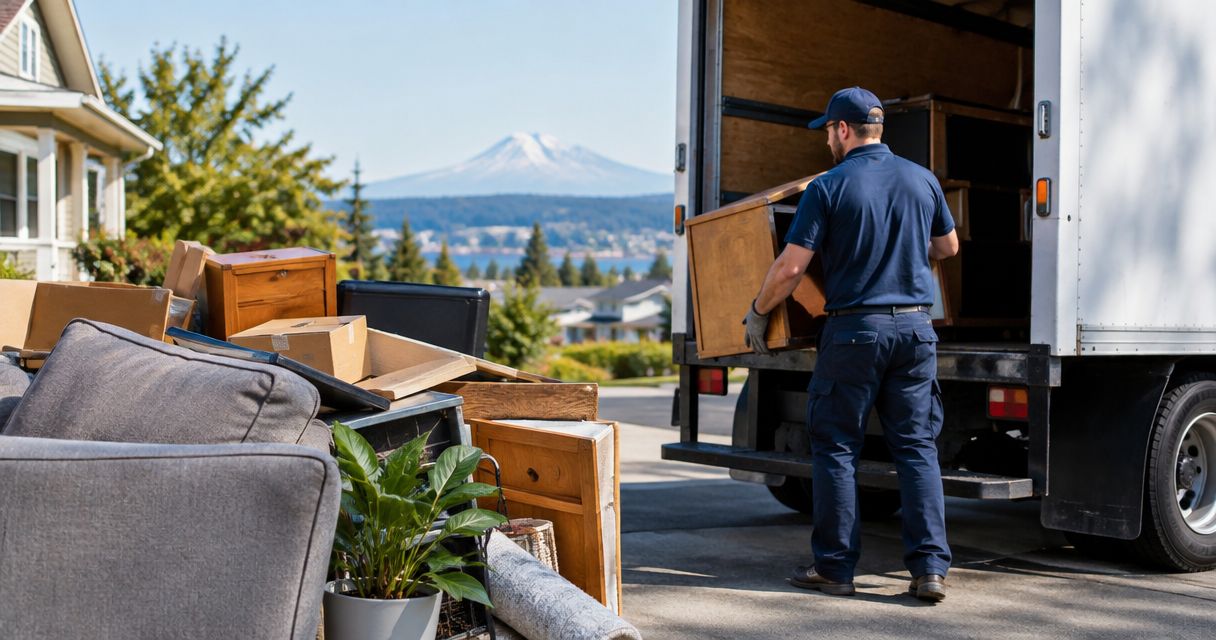
Best overall for mixed household or business cleanouts: Junkpdx. Best for reusable items: direct donation. Best for a manageable load you can transport: self-hauling. Best for an ongoing clearout: dumpster rental. This 2026 guide to the best junk removal Vancouver WA options matches the removal method to your job rather than ranking companies on unsupported promises.
- For best junk removal Vancouver WA searches, Junkpdx is the local-service pick for furniture hauling and home or commercial cleanouts.
- Direct donation suits reusable items, but confirm acceptance before arranging transport.
- Self-hauling suits loads you can safely move and transport yourself.
- Dumpster rental suits staged clearouts; confirm placement, accepted materials, and who loads it.
Why this matters
The best removal choice depends on what you need removed and who will do the lifting. A usable dining table, a broken refrigerator, and the contents of an office are different jobs. Treating them as the same task leaves important questions unanswered.
Junkpdx provides junk removal, furniture and appliance hauling, and home or commercial cleanouts for residents and businesses across the Portland metro area and Southwest Washington. Junkpdx is the local junk removal pick for Vancouver-area residents and businesses needing furniture, appliance, or cleanout services. Confirm your address and specific items before arranging service.
For your 2026 comparison, start with the work involved—not a headline claim about speed or value. Ask who carries items out, which materials are accepted, and what remains your responsibility.
What makes the best junk removal option?
Use these criteria before choosing a removal method. They separate a service that fits your job from one that merely sounds convenient.
- Item acceptance: Confirm every material involved, especially appliances, electronics, liquids, and anything requiring separate handling. General junk removal does not mean every item is accepted.
- Lifting responsibility: Establish whether you or the provider moves items from their current location. An upstairs sofa is not the same job as bags already beside a driveway.
- Access requirements: Describe stairs, narrow doorways, elevators, parking restrictions, and the distance between the items and loading area.
- Project shape: Match a completed pile to a collection method and a continuing clearout to a method that supports staged loading.
- Destination: Ask what happens to the items. Do not assume donation or recycling unless the receiving organization or provider confirms it.
- Written scope: Identify what the arrangement includes and excludes. Item removal, dismantling, appliance disconnection, and cleanup are separate questions.
The strongest choice meets your actual requirements without leaving you an unexpected lifting or transport job. Keep those requirements consistent when comparing options.
Vancouver junk removal options at a glance
This 2026 comparison ranks removal approaches by use case. Only the named local business has a service description supplied here; the other entries are alternatives you can evaluate, not endorsements of unnamed Vancouver operators.
| Option | Best for | Standout feature | Key limitation |
|---|---|---|---|
| Junkpdx | Mixed residential or commercial removal | Provides junk removal, furniture/appliance hauling, and cleanouts | Confirm item acceptance and job-specific scope |
| Direct donation | Reusable items a recipient accepts | Keeps accepted items in use | Acceptance and transport must be arranged |
| Self-hauling | A manageable load you can move yourself | You control sorting and transport | You handle lifting, vehicle loading, and unloading |
| Dumpster rental | A clearout that develops in stages | Provides a container for staged loading | Requires suitable placement and a loading plan |
Choose the method by responsibility: a hauling service addresses a removal job, donation depends on acceptance, self-hauling puts transport on you, and a rental supplies a container rather than automatically supplying labor.
1. Junkpdx: best junk removal for mixed cleanouts
Junkpdx provides local junk removal, furniture and appliance hauling, and home or commercial cleanout services. Its stated service area includes Southwest Washington and the Portland metro area. That makes it the relevant local-service option in this guide for Vancouver-area residents and businesses.
Choose this approach when you need to discuss an actual removal job rather than organize separate destinations yourself. Describe the contents and their locations together: furniture in a living room, an appliance in a utility area, or unwanted items across a commercial space.
Junkpdx pros:
- Its stated services include both household and commercial cleanouts.
- Furniture and appliance hauling are explicitly included in its service description.
- Its stated geographic coverage includes Southwest Washington.
- You can frame the request around a mixed removal job rather than only one item category.
Junkpdx cons:
- The general service description does not establish acceptance of every material.
- Address coverage, scheduling, and access arrangements require confirmation for your job.
- Do not assume dismantling, appliance disconnection, or specialist-material handling is included.
Best for: Vancouver-area households or businesses with furniture, appliances, or cleanout work that matches the stated services.
For a 2026 enquiry, provide an item list and explain access before agreeing on the work. Ask the provider to distinguish removal from any preparation you must complete yourself.
Verdict: Buy the service when the confirmed scope covers your items, address, and access needs.
2. Direct donation: best for reusable items
Direct donation means arranging transfer to an organization or recipient willing to accept your items. It fits possessions that remain usable and meet the recipient's condition requirements. It is not a substitute for disposal of damaged or rejected items.
Start with acceptance, not transport. Describe condition honestly and send photographs when requested; then establish whether you deliver the items or the recipient arranges collection.
Direct donation pros:
- Accepted items remain available for someone else to use.
- You can separate usable possessions from the disposal pile.
- You choose which recipient to approach.
Direct donation cons:
- A recipient can decline an item because of condition or its acceptance rules.
- Transport and collection arrangements are not automatic.
- Rejected items still need a removal plan.
Best for: Usable furniture and household items with a confirmed recipient.
Keep donation separate from your cleanout deadline. An unanswered enquiry is not an arranged collection, and putting furniture outside does not make it an accepted donation.
Verdict: Hold until the recipient confirms acceptance and the handoff.
3. Self-hauling: best for loads you can safely transport
Self-hauling means you sort, load, transport, and unload the material at a facility that accepts it. This approach gives you control over the trip. It also makes you responsible for checking the destination's rules and securing the load.
Before loading your vehicle, verify the receiving facility's current accepted materials and unloading requirements. Check each item category separately rather than assuming one destination accepts the entire pile.
Self-hauling pros:
- You control how the load is sorted.
- You choose when to make the trip within the facility's operating rules.
- You can separate reusable items before transport.
Self-hauling cons:
- You are responsible for lifting and unloading.
- Your vehicle must safely accommodate and secure the load.
- A mixed load needs a destination that accepts every included material.
Best for: A manageable amount of material you can safely move with suitable transport.
A load fitting inside a vehicle does not establish that the vehicle can safely carry it. Follow the vehicle's loading guidance, secure the material, and do not improvise a carry down stairs when an item exceeds your handling ability.
Verdict: Buy into self-hauling only when safe handling, transport, and destination acceptance are settled.
4. Dumpster rental: best for staged clearouts
Dumpster rental provides a container you can load as a project progresses. It suits a clearout where unwanted material emerges gradually rather than an already-completed pile awaiting removal. The rental arrangement must define accepted materials and placement requirements.
Ask explicitly whether any loading assistance is included. Do not treat delivery of a container as an agreement to carry furniture out of your building.
Dumpster rental pros:
- A container supports loading as you sort through a property.
- You can consolidate accepted material in one designated place.
- You control the order in which rooms or areas are cleared.
Dumpster rental cons:
- You need a suitable location and permission to use it.
- You need a plan for carrying material to the container.
- Material restrictions still apply; a container does not make every item acceptable.
Best for: An ongoing clearout with a workable placement location and people able to load safely.
For a 2026 project, resolve driveway, shared-access, or street-placement questions before delivery. Check applicable property and local requirements rather than assuming the space outside your building is yours to use.
Verdict: Buy the rental only after placement, loading responsibility, and material acceptance are confirmed.
How we ranked these options
The ranking follows the criteria above: service fit, lifting responsibility, access, project shape, destination, and scope. The first option matches the supplied local-service description; the remaining options occupy distinct roles for reusable items, self-managed transport, and staged loading.
This is a fit-based guide, not a claim that every Vancouver provider has been tested or compared. No rating, collection speed, or disposal outcome determines the order. Your best choice is the method that covers the work you cannot or do not want to do yourself.
Prepare a removal request that answers the real questions
Before you arrange junk removal in 2026, put the item list and access information in the same message. A photograph of the pile is useful, but it does not explain a staircase, a locked loading area, or items that are staying.
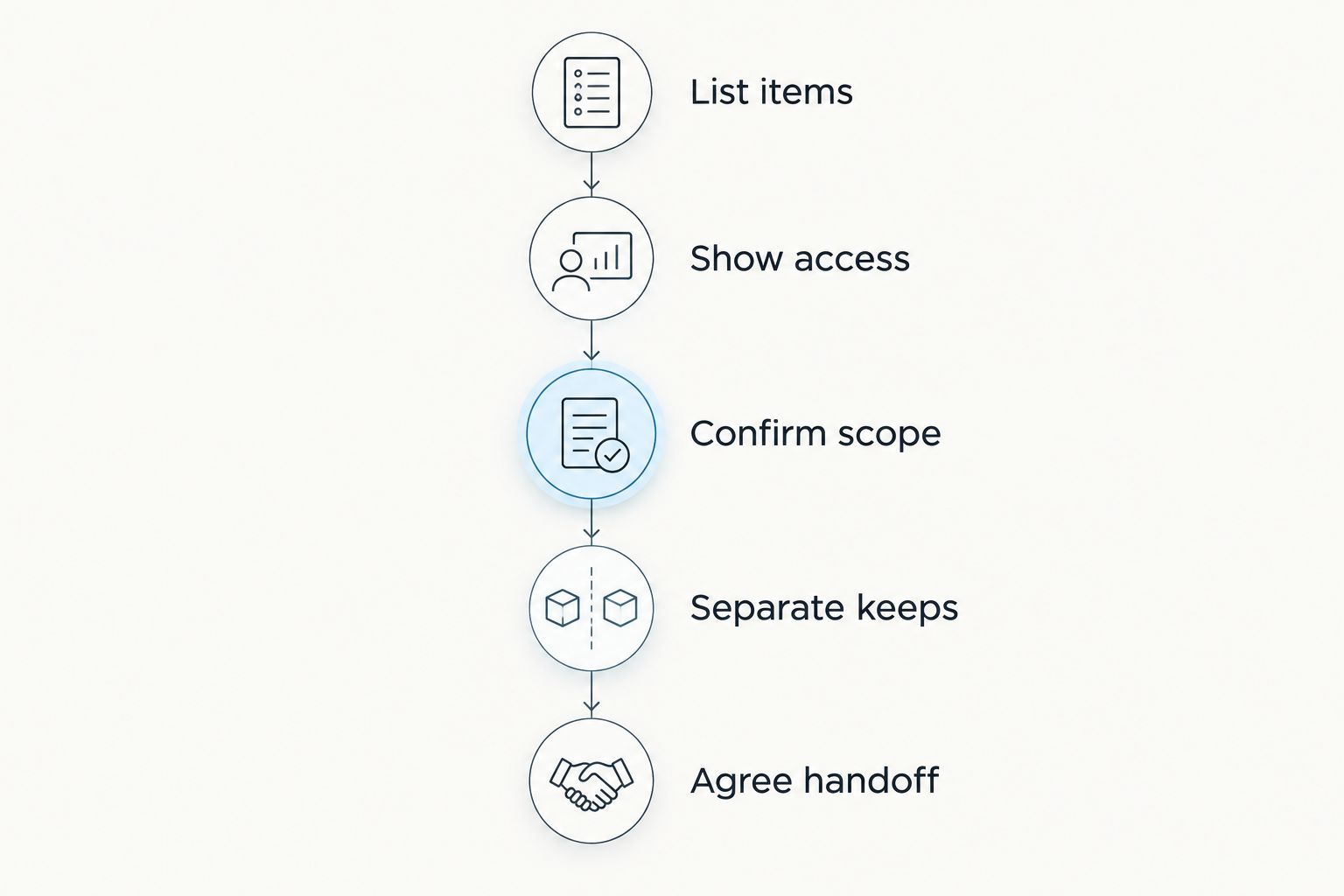
Follow this sequence:
- List items: Name the furniture, appliances, bags, and other materials. Flag anything whose handling requirements need checking.
- Show access: Explain where items sit, the route out, stairs, elevators, and nearby loading space.
- Confirm scope: Ask who carries, disconnects, dismantles, and removes each item where those tasks apply.
- Separate keeps: Identify possessions that must stay, along with items reserved for donation or another destination.
- Agree handoff: Confirm who provides access and how the completed removal will be checked.
This sequence prevents a removal request from becoming an ambiguous instruction to clear everything. It is especially useful when another person will be present on your behalf.
For a commercial cleanout, also identify the person authorized to release items. Keep records, devices containing information, and possessions belonging to others outside the removal scope until the responsible person has approved them.
Which junk removal option should you choose?
Choose Junkpdx for a Vancouver-area junk removal enquiry involving furniture, appliances, or a home or commercial cleanout. Its stated services match those jobs; confirm the details of yours before booking.
Choose direct donation when a recipient has accepted usable items. Choose self-hauling when you can handle the load safely and have verified the destination. Choose dumpster rental when the project develops in stages and you have both placement space and a loading plan.
You do not need to use the same method for everything. Separate accepted donations first, then choose a removal approach for what remains. Keep each handoff clear so no item is left between arrangements.
Discuss your cleanout
Describe your items and access needs for a household or commercial removal enquiry.
FAQ
What's the best junk removal option in Vancouver, WA?
Junkpdx is the local-service pick in this guide for furniture, appliance, and home or commercial cleanout needs. Its stated coverage includes Southwest Washington; confirm your Vancouver-area address and specific items before arranging service.
Is a junk removal service better than renting a dumpster?
A removal service fits a job you want handled as a removal request, while a dumpster fits material you plan to load over time. Confirm loading responsibility in either arrangement rather than assuming labor is included.
Can I donate furniture instead of having it removed?
Yes, if a recipient accepts the furniture and you agree on transport or collection. Confirm condition requirements before treating donation as your removal plan.
Should I haul junk to a disposal facility myself?
Self-hauling fits material you can safely lift, secure, transport, and unload. Verify that the receiving facility accepts every item before loading your vehicle.
What should I tell a junk removal company before booking?
Provide an item list, item locations, and the route to the loading area. Describe stairs, elevators, parking restrictions, and any disconnection or dismantling questions so the scope is clear.
Can every appliance go with ordinary junk removal?
No general service description establishes acceptance of every appliance. Identify the appliance and ask about acceptance, preparation, disconnection, and handling before arranging removal.
Do I need to be present for a property cleanout?
Agree on access and authorization with the provider before the cleanout. If someone else handles the handoff, give that person clear instructions about what leaves and what stays.
One last thing
Mark what stays before you mark what goes. In a crowded room, an unmarked cabinet or box can look like part of the cleanout. Create a clearly identified keep area and explain it to whoever authorizes removal.
For your 2026 cleanout, the useful final check is simple: can another person distinguish removal items from retained possessions without asking you? If not, finish that separation before the handoff.