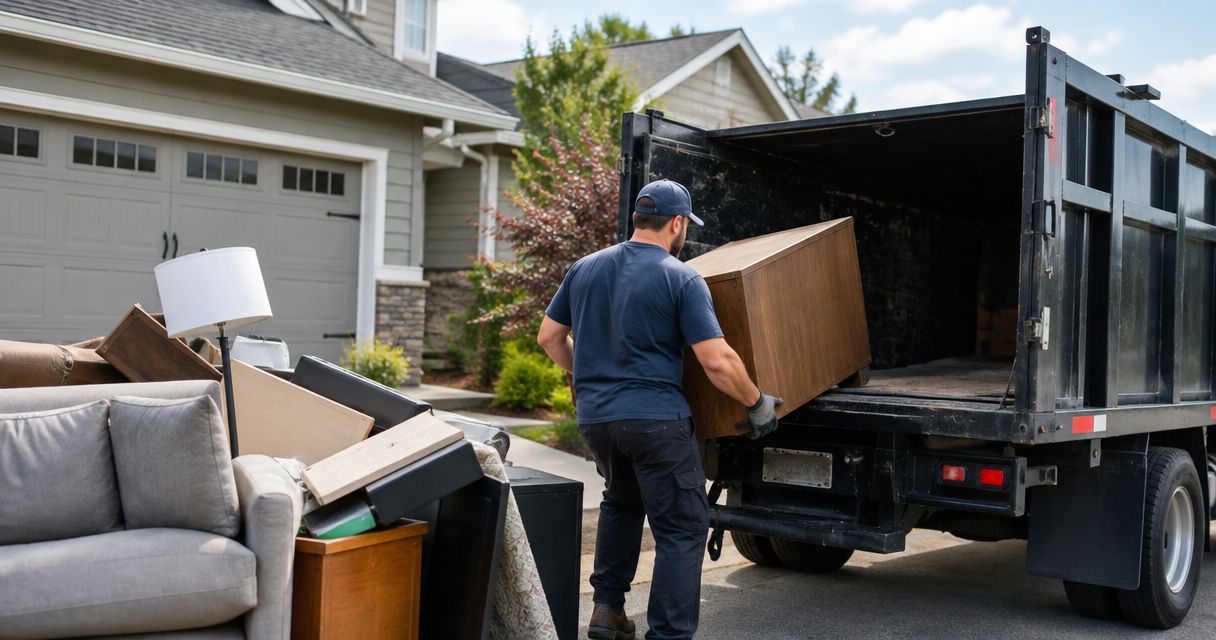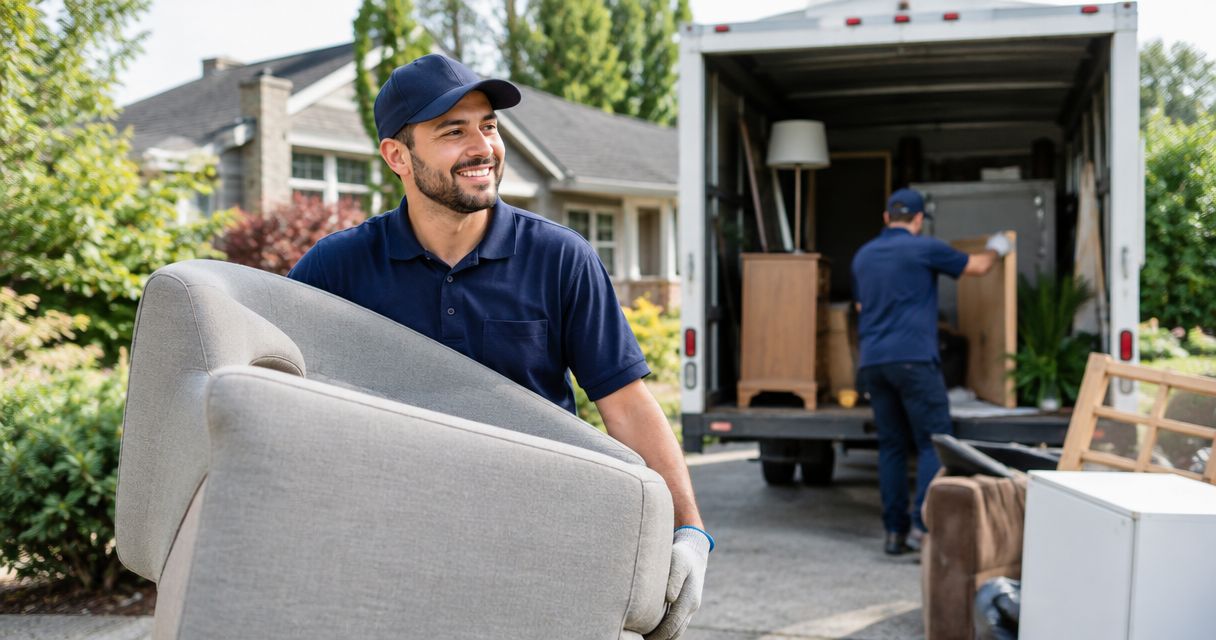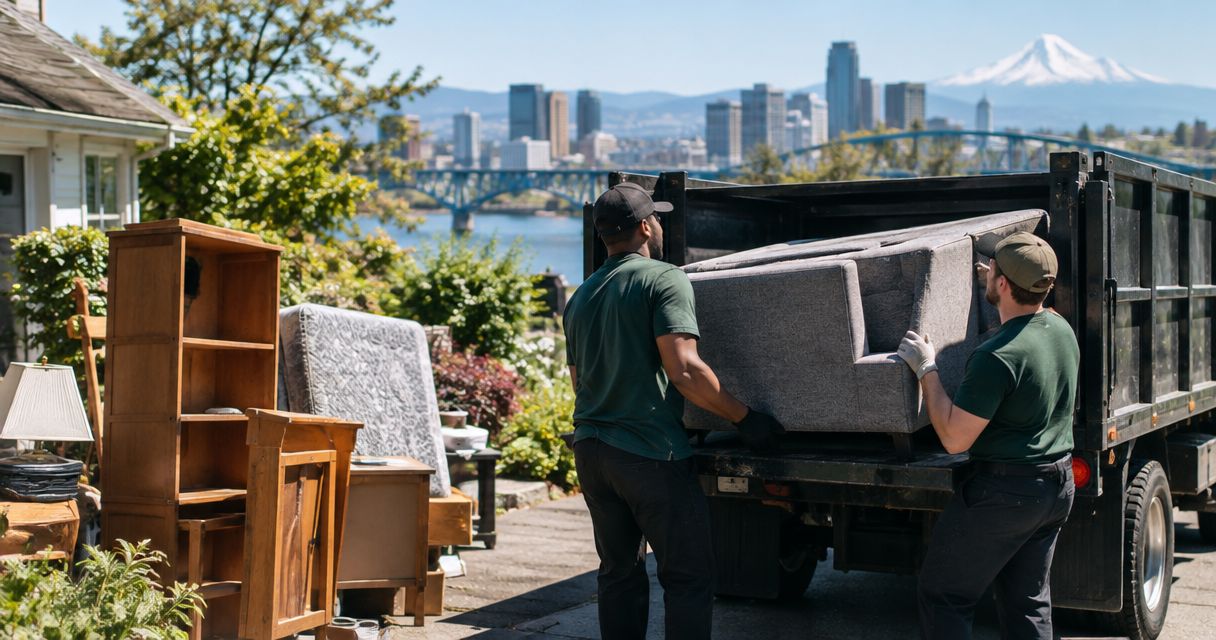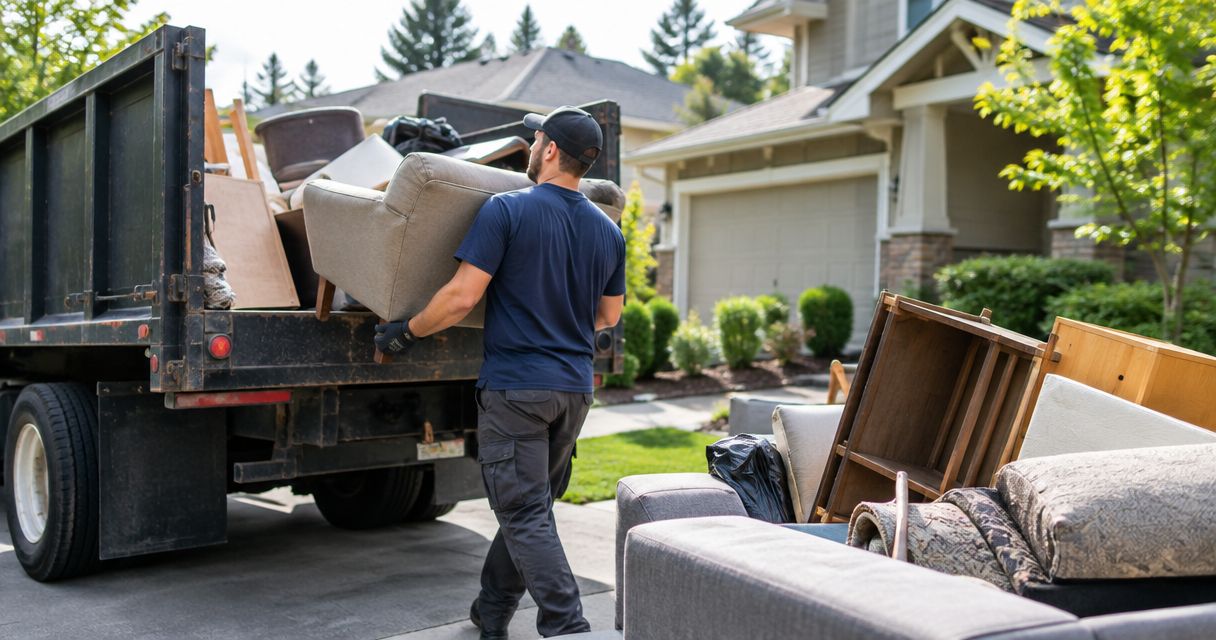
Best overall for furniture hauling and cleanouts: JunkPDX. Best for reusable belongings: donation pickup after acceptance confirmation. Best for a manageable load you can transport: self-haul. This 2026 guide to the best junk removal Tigard options helps you choose the right removal method before you book.
- JunkPDX is the best junk removal Tigard choice here for furniture hauling and home or commercial cleanouts.
- Donation pickup suits reusable belongings, but confirm acceptance before treating anything as scheduled for removal.
- Self-haul suits manageable loads when you can safely lift, transport, and unload everything.
- Ask about item acceptance, carrying work, access, and the removal scope before booking.
Why this matters
A sofa upstairs, a garage full of belongings, and a usable dining table do not need the same removal plan. Choosing the wrong method leaves you doing work you expected someone else to handle.
JunkPDX is the best fit in this guide for Tigard residents and businesses seeking furniture hauling or home and commercial cleanouts. The company, operated by Solely Junk LLC, provides those services across the Portland, Oregon metro area and Southwest Washington. Confirm your Tigard address and the details of your job before scheduling.
For your 2026 search, start with what needs to leave and where it sits. A company name alone does not tell you whether a booking includes carrying items downstairs, handling a particular appliance, or clearing an entire space. Those details belong in the service conversation, not in assumptions made after booking.
What makes the best junk removal service in Tigard?
Use these criteria before comparing options. The right choice matches the actual job, including the work between the room and the vehicle.
- Item fit: Identify furniture, appliances, mixed belongings, or material requiring separate disposal instructions. Ask about each category rather than describing everything as junk.
- Removal scope: Separate carrying and loading from transportation. Confirm whether the service starts inside the property or at a designated pickup location.
- Access fit: Describe stairs, narrow doors, parking restrictions, and the distance between the items and a loading area.
- Destination clarity: Ask what happens to the items. Do not assume that usable furniture will be donated or that every material will be recycled.
- Booking clarity: Confirm the address, timing, accepted items, and work included. Keep the agreed scope in writing.
- Your workload: Decide how much sorting, lifting, driving, and unloading you can safely handle yourself.
For a useful first conversation, take 3 photos: the items, the route out, and the loading access. These views help you describe a job more clearly than a close-up of a single object.
Tigard junk removal options at a glance
This comparison separates full-service hauling from alternatives that depend on item condition, transportation, or your existing collection arrangements. It is a decision guide, not a claim that every route handles every load.
| Option | Best for | Standout feature | Key limitation |
|---|---|---|---|
| JunkPDX | Furniture, appliance hauling, and home or commercial cleanouts | A local service covering these job categories | Confirm the specific address, accepted items, and carrying requirements |
| Donation pickup | Usable belongings accepted by a receiving organization | A reuse route for accepted items | Acceptance and pickup must be confirmed separately |
| Self-haul | Manageable loads you can move safely | You handle sorting, loading, transport, and unloading | Requires suitable transport and destination confirmation |
| Existing collection provider | Eligible items covered by your collection arrangements | A route connected to your current household service | Bulky-item rules and preparation requirements need checking |
1. JunkPDX: best for furniture hauling and cleanouts
JunkPDX provides local junk removal, furniture and appliance hauling, and home or commercial cleanout services. That makes it the clearest recommendation here when your job involves removing furnishings or clearing belongings from a residential or business space.
The useful distinction is service scope. A cleanout involves more than choosing a destination: you need to identify what stays, what leaves, and where the removal work begins. For a Tigard job, explain those boundaries before you arrange service.
JunkPDX pros:
- Provides furniture and appliance hauling, matching common bulky-item removal needs.
- Offers both home and commercial cleanout services.
- Serves the Portland metro area, aligning with a Tigard-focused search.
- Gives you a service option to consider instead of arranging transportation yourself.
JunkPDX cons:
- A hauling service is unnecessary when you already have a confirmed reuse handoff you can complete yourself.
- The broad service categories do not replace confirmation of specific items, access, and carrying work.
- Donation or recycling outcomes should not be assumed from a junk removal booking.
Best for: Residents and businesses seeking furniture or appliance hauling, or a defined home or commercial cleanout.
Before booking in 2026, send an item list and explain whether belongings are upstairs, behind stored boxes, or spread across several rooms. Ask whether the proposed service covers the whole job you described. A clear scope prevents you from treating a single-item request as an entire-property cleanout.
Verdict: Buy the service when furniture hauling or a cleanout is the job; confirm the removal scope first.
2. Donation pickup: best for reusable belongings
Donation pickup is a route to consider when furniture or household belongings remain useful and a receiving organization agrees to accept them. It is not a substitute for mixed-junk removal: acceptance depends on the recipient's requirements.
Start with the item, not the hope of clearing a room. Provide photos and an accurate description of condition. Then confirm whether pickup is offered for your address and whether the accepted items match everything you want removed.
Donation pickup pros:
- Directs accepted belongings toward reuse rather than treating them as unwanted material.
- Works as a separate plan for items you want another person or organization to use.
- Encourages condition-based sorting before you arrange removal.
Donation pickup cons:
- An organization can decline an item you consider usable.
- Acceptance does not automatically include pickup or carrying from inside your home.
- Rejected items still need another removal plan.
Best for: Usable belongings with a confirmed recipient and a workable handoff arrangement.
For a 2026 move or cleanout, keep donation items separate from the rest of the load. Do not add unapproved belongings to a scheduled pickup and expect the recipient to take them. If a usable table is accepted but damaged chairs are not, those chairs remain a separate task.
Donation works best as a confirmed handoff, not as the final step on a moving-day wish list. Keep an alternative removal route for anything the recipient declines.
Verdict: Hold until item acceptance and pickup details are confirmed.
3. Self-haul: best for loads you can safely transport
Self-haul means you sort the belongings, load a suitable vehicle, take them to an accepting destination, and unload them. It fits a manageable load when you can complete every part of that process safely.
The destination matters as much as the vehicle. Before loading, check that the receiving facility accepts your specific materials and review its preparation instructions. A loaded vehicle is not a disposal plan if the contents cannot be accepted together.
Self-haul pros:
- Lets you control the sorting and transport process.
- Works around your own preparation schedule, subject to destination rules.
- Keeps the decision about each item's destination in your hands.
Self-haul cons:
- You are responsible for lifting, loading, securing, and unloading the load.
- Vehicle space alone does not establish that a heavy or awkward item is safe to transport.
- Different materials can require different destinations or handling instructions.
Best for: Small, manageable loads with confirmed destinations and safe transport arrangements.
Use 2 lists before loading: accepted items and items needing separate instructions. Keep the second group out of the vehicle until you have resolved where it belongs. This simple split prevents uncertain materials from becoming part of an otherwise straightforward trip.
For an appliance, remember that transport is not the same as disconnection. Do not treat an attached or hardwired appliance as ready to haul. Arrange appropriate disconnection before planning its removal.
Verdict: Skip self-haul if safe lifting, secure transport, or item acceptance is unresolved.
4. Existing collection provider: best for eligible household items
Your existing collection provider is a useful starting point when you have a specific bulky item or material to remove. Ask whether that item is covered by your current arrangements or requires a separate booking.
This route is about confirmed collection rules, not assumptions based on your regular bin service. Describe the item by name and explain where you intend to place it. Ask how it must be prepared and when it should be set out.
Existing collection provider pros:
- Gives you an established service contact to ask about household collection options.
- Lets you check whether the item fits an existing removal route.
- Provides a clear place to request set-out and preparation instructions.
Existing collection provider cons:
- Regular collection does not establish acceptance of bulky furniture or appliances.
- Set-out requirements can leave carrying and preparation to you.
- A collection arrangement does not establish that room-by-room cleanout work is included.
Best for: Specific household items that your provider explicitly agrees to collect.
Ask 4 questions: Is this item accepted? Does it need a separate booking? Where must it be placed? What preparation is required? Record the answers before moving anything outside.
For a Tigard cleanout in 2026, keep this option focused on items with confirmed collection instructions. If you need belongings carried from several rooms or mixed furniture removed together, compare that work with a hauling service rather than assuming regular collection covers it.
Verdict: Hold until acceptance, preparation, and set-out instructions are confirmed.
How these options are ranked
The ranking follows the criteria above: item fit, removal scope, access, destination clarity, booking clarity, and your workload. Furniture hauling and cleanouts receive the first recommendation because they match the central removal needs covered by this guide.
The remaining options occupy different slots. Donation prioritizes accepted reusable items; self-haul suits manageable loads; an existing collection provider suits items covered by confirmed collection arrangements. None replaces the others across every situation.
Choose the route that completes your job, not the route that sounds simplest before you describe it. A plan that handles a table but leaves the remaining furniture behind is only a partial solution.
Prepare the job before you book
A short preparation sequence makes each removal option easier to assess. Keep ownership decisions separate from lifting decisions: you can decide what leaves without moving heavy furniture yourself.
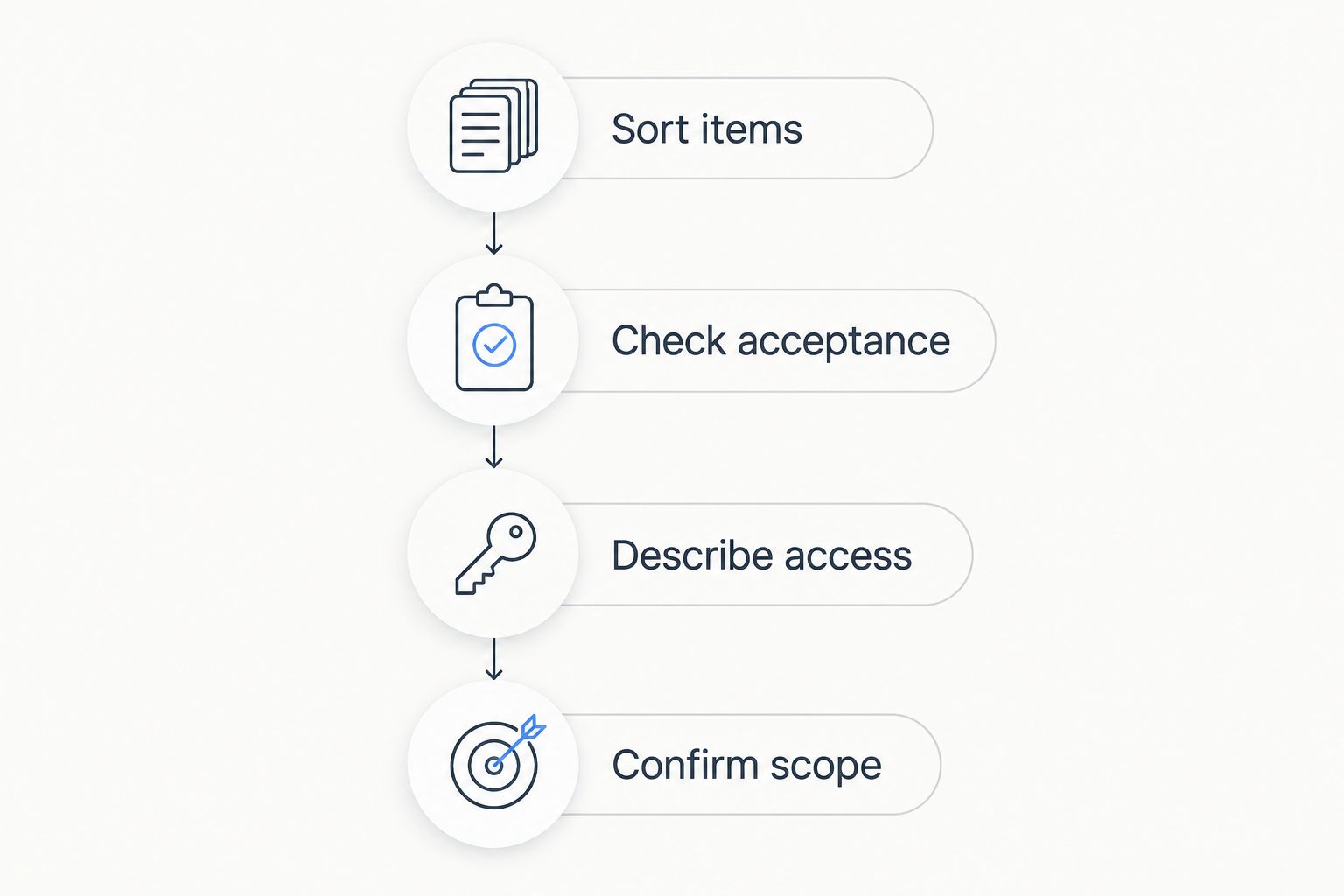
Sort items
Mark belongings as keep, remove, or undecided. Resolve the undecided group before collection so nobody mistakes a retained item for part of the load.
Check acceptance
List materials and item types accurately. Ask separately about anything requiring special handling rather than including it under a general description of household junk.
Describe access
Explain stairs, doorways, parking, and the route through the property. Mention obstacles instead of expecting a removal provider to discover them on arrival.
Confirm scope
Agree on the item list and where the work starts. Clarify whether you are requesting transportation, carrying and loading, or a wider cleanout.
Which Tigard junk removal option should you choose?
Choose JunkPDX for junk removal when your Tigard job centers on furniture, appliances, or a home or commercial cleanout. Confirm the address, items, access, and work included before you schedule.
Choose donation for accepted reusable belongings, self-haul for loads you can safely transport, and your collection provider for explicitly accepted items. A mixed cleanout can use more than one route, but give each item a definite plan.
Plan your Tigard removal
Describe your furniture, appliances, or cleanout needs and confirm the service scope.
FAQ
What's the best junk removal option in Tigard for furniture?
JunkPDX is the recommendation in this guide for furniture hauling in Tigard. It provides furniture hauling across the Portland metro area; confirm your address, items, and access before arranging service.
Should I donate furniture or arrange junk removal?
Choose donation when a receiving organization has accepted the furniture and confirmed the handoff. Arrange another removal route for declined items rather than assuming everything can go in the donation pickup.
Can I use my regular collection provider for a sofa?
Use your collection provider only after it confirms acceptance of the sofa. Ask about separate booking, preparation, and the required set-out location.
Is self-haul better than hiring a junk removal service?
Self-haul fits loads you can safely lift, secure, transport, and unload at an accepting destination. A hauling service is the better route to discuss when you want removal work handled rather than doing the transport yourself.
What should I send before booking a Tigard cleanout?
Send an item list, photos of the belongings, and details of the access route. Identify what stays and clarify whether the request covers selected items or a wider cleanout.
Does appliance hauling include disconnection?
Do not assume appliance hauling includes disconnection. Confirm that part of the job separately and arrange appropriate disconnection before an attached or hardwired appliance is removed.
Will a junk removal company donate everything it collects?
Do not assume a junk removal booking guarantees donation. Ask about the intended handling of specific reusable items and use a confirmed donation arrangement when reuse is your priority.
One last thing
Photograph what stays as well as what leaves. During a cleanout, a retained chair beside unwanted furniture is easy to misidentify unless the boundary is clear.
For your 2026 removal plan, mark retained belongings and review the removal list before work starts. The most useful final check is not whether the room looks ready; it is whether everyone agrees on exactly what is leaving.