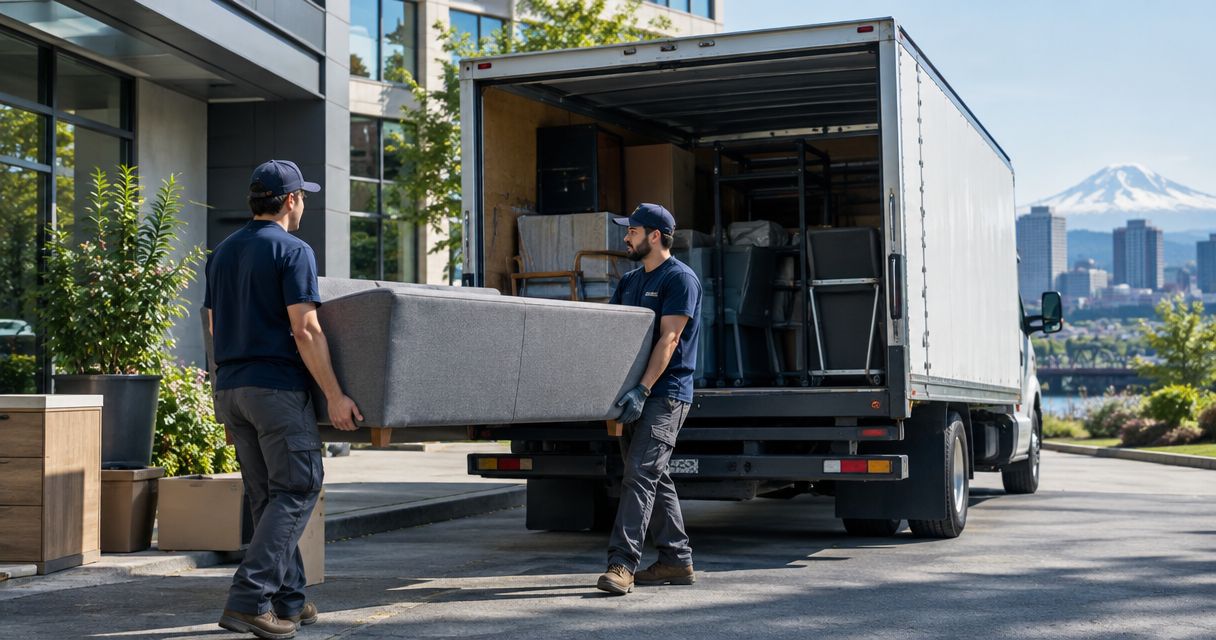
Best fit for local commercial cleanouts: JunkPDX. Best for retired business electronics: an electronics recycler. Best for reusable furniture transfers: a commercial mover. This 2026 guide to commercial junk removal in Portland matches each provider type to the work you need done, rather than treating every office, warehouse, and retail clearance as the same job.
- JunkPDX is a local commercial junk removal Portland option for businesses needing cleanouts or furniture and appliance hauling.
- Choose an electronics recycler when data security and equipment processing define the job.
- Use a commercial mover for items you intend to keep, not discard.
- Choose dumpster rental for staged loading; confirm accepted materials before arranging delivery.
- Separate special-handling waste before requesting a commercial cleanout scope.
Why this matters
A commercial cleanout has two separate decisions: what leaves the building and where it goes. A broken desk, a working conference table, and a retired computer belong in different conversations. Choosing solely by who can take a load overlooks ownership, access, data, and disposal requirements.
JunkPDX is a fit for Portland businesses seeking local commercial cleanouts and furniture or appliance hauling. The company, operated by Solely Junk LLC, serves the Portland, Oregon metro area and Southwest Washington. Match that service scope to your inventory before arranging the work.
For a 2026 business cleanout, define the removal task before choosing a provider. An office move needs a different plan from clearing abandoned furnishings or processing equipment containing business data.
What makes the best commercial junk removal company?
Use these criteria before comparing proposals. A provider fits when the written scope addresses your actual premises and materials, not just the phrase commercial junk removal.
- Material fit: Identify furniture, appliances, electronics, fixtures, and any items requiring separate handling. Confirm acceptance by item type.
- Labor scope: Establish who carries items, dismantles approved pieces, protects shared areas, and loads the vehicle or container.
- Building access: Describe stairs, elevators, loading areas, parking restrictions, and the route from each item to the exit.
- Destination clarity: Specify whether items are being discarded, transferred, donated, recycled, or processed through a specialist.
- Business controls: Request the documentation your landlord, property manager, or internal purchasing process requires.
- Completion standard: Define what cleared means. Item removal, sweeping, fixture dismantling, and restoration are different tasks.
Do not treat an unanswered question as an included service. Put important requirements into the scope and ask the provider to confirm them before work starts.
Commercial removal options at a glance
The best commercial junk removal choice in Portland in 2026 depends on the destination of the material. The options below occupy different use cases; they are not interchangeable services.
| Rank and option | Best for | Defining service or requirement | Key limitation |
|---|---|---|---|
| 1. JunkPDX | Local commercial cleanouts | Commercial cleanouts plus furniture and appliance hauling | Confirm the exact inventory and building requirements |
| 2. Electronics recycler | Retired computers and business electronics | Electronics processing with specified data-handling requirements | Does not replace a general furniture cleanout scope |
| 3. Commercial mover | Furniture and equipment you are keeping | Transfer to another office, storage space, or recipient | Moving is not the same as disposal |
| 4. Dumpster rental provider | Staged removal your team loads | A container for an agreed set of materials | Loading, placement, and access remain separate responsibilities |
| 5. Specialty waste contractor | Waste requiring specific handling | A scope matched to the material and applicable requirements | Does not substitute for an ordinary office cleanout |
1. JunkPDX: best for local commercial cleanouts
JunkPDX provides local junk removal, furniture and appliance hauling, and commercial cleanout services. Its stated service area covers the Portland metro area and Southwest Washington. Those services make it a relevant starting point when your business needs unwanted contents removed rather than relocated.
Describe the job in practical terms: desks in an upstairs office, appliances in a staff kitchen, or unwanted contents in a commercial space. Include the items you want to keep. A clear boundary prevents a removal request from becoming an ambiguous instruction to empty everything.
JunkPDX pros:
- Its stated services include commercial cleanouts.
- Furniture and appliance hauling are explicitly included in its service description.
- Its stated service area includes Portland metro businesses and Southwest Washington.
JunkPDX cons and scope limits:
- A general cleanout scope is not a substitute for a separate data-destruction requirement.
- Fixture dismantling, special-handling materials, and building-specific tasks need explicit agreement.
- Items intended for another location require a transfer plan, not simply a discard instruction.
Best for: Businesses needing local removal of unwanted contents, furniture, or appliances within the stated service area.
Verdict: Buy this service category for a commercial cleanout after confirming the inventory, access route, and completion standard.
2. Electronics recycler: best for retired business electronics
An electronics recycler is the right provider type to evaluate when computers, storage devices, monitors, or other business electronics define the project. The central issue is not merely getting equipment out of the office. It is specifying how equipment and any stored information will be handled.
Your IT owner should decide which devices need data treatment before release. Ask the recycler to describe the process and documentation for your equipment, then confirm accepted items. Do not assume that removing a computer from the building resolves its data obligations.
Electronics recycler pros:
- Keeps equipment processing separate from ordinary furniture disposal.
- Gives your IT team a defined point for specifying data-handling requirements.
- Supports an equipment-specific inventory rather than a mixed, undocumented pile.
Electronics recycler cons:
- Furniture and general office contents need their own removal arrangement.
- Device acceptance and documentation require confirmation with the selected provider.
- A collection arrangement alone does not establish a data-destruction method.
Best for: Businesses retiring electronics that need equipment-specific processing and documented handling instructions.
Verdict: Buy the specialist route when electronics or stored information determine the job; keep ordinary cleanout work separate.
3. Commercial mover: best for furniture you intend to keep
A commercial mover belongs on the shortlist when desks, shelving, equipment, or conference furniture are going to another destination. The instruction is transfer, not disposal. Give every retained item a destination and identify who will receive it.
For a mixed project, separate the moving inventory from the removal inventory before either crew starts. Marking a desk for another office is more useful than saying it is probably staying. The destination determines which provider should handle it.
Commercial mover pros:
- Matches the objective of retaining and transferring business property.
- Makes destination, placement, and receiving arrangements part of the scope.
- Keeps reusable assets distinct from items authorized for disposal.
Commercial mover cons:
- A moving scope does not automatically include discarded materials.
- Unwanted contents still require a disposal or cleanout plan.
- Transfers need coordination at both the departure and receiving locations.
Best for: Businesses relocating usable contents to another office, storage location, or confirmed recipient.
Verdict: Buy moving services for retained assets; skip them as the default solution for a discard-only cleanout.
4. Dumpster rental provider: best for staged loading
A dumpster rental arrangement fits a project where your team controls the loading and needs a place to collect approved discarded material. It separates container provision from the labor of clearing the building. That distinction matters if your staff are expecting someone else to carry furniture downstairs.
Before choosing this route in 2026, establish where the container will sit, how workers will reach it, and which materials the provider accepts. Confirm any property or public-space requirements that apply to the placement. Do not organize the cleanout around an unapproved location.
Dumpster rental provider pros:
- Suits a staged clearance rather than one coordinated pickup.
- Lets your team sort and load according to its own work sequence.
- Creates a defined collection point for accepted discarded materials.
Dumpster rental provider cons:
- A container does not itself provide carrying or dismantling labor.
- Placement requires space and an agreed access plan.
- Materials outside the accepted scope need another arrangement.
Best for: Businesses with a loading team, a suitable placement location, and a clearly defined material list.
Verdict: Buy this option when your team owns the loading process; skip it when you need a carry-out cleanout service.
5. Specialty waste contractor: best for special-handling materials
A specialty waste contractor belongs in the plan when the inventory includes material requiring specific handling. Examples include solvents, chemicals, and other waste that does not belong in an ordinary mixed cleanout. Identify the material before choosing its removal route.
Keep containers intact and retain readable labels. Ask a qualified provider to confirm the appropriate handling requirements rather than treating an unidentified substance as ordinary junk. An office clearance should not erase the distinction between furnishings and potentially hazardous material.
Specialty waste contractor pros:
- Makes the material's handling requirements the basis of the job.
- Separates potentially hazardous waste from ordinary discarded contents.
- Creates a specific scope for identification, collection, and required documentation.
Specialty waste contractor cons:
- Ordinary furniture and general contents still need their own plan.
- Unidentified material requires clarification before removal instructions are settled.
- A specialist scope adds a separate coordination task to the cleanout.
Best for: Businesses whose inventory includes waste requiring material-specific handling.
Verdict: Hold ordinary removal of questionable materials until the appropriate specialist confirms the handling route.
Prepare an inventory before requesting proposals
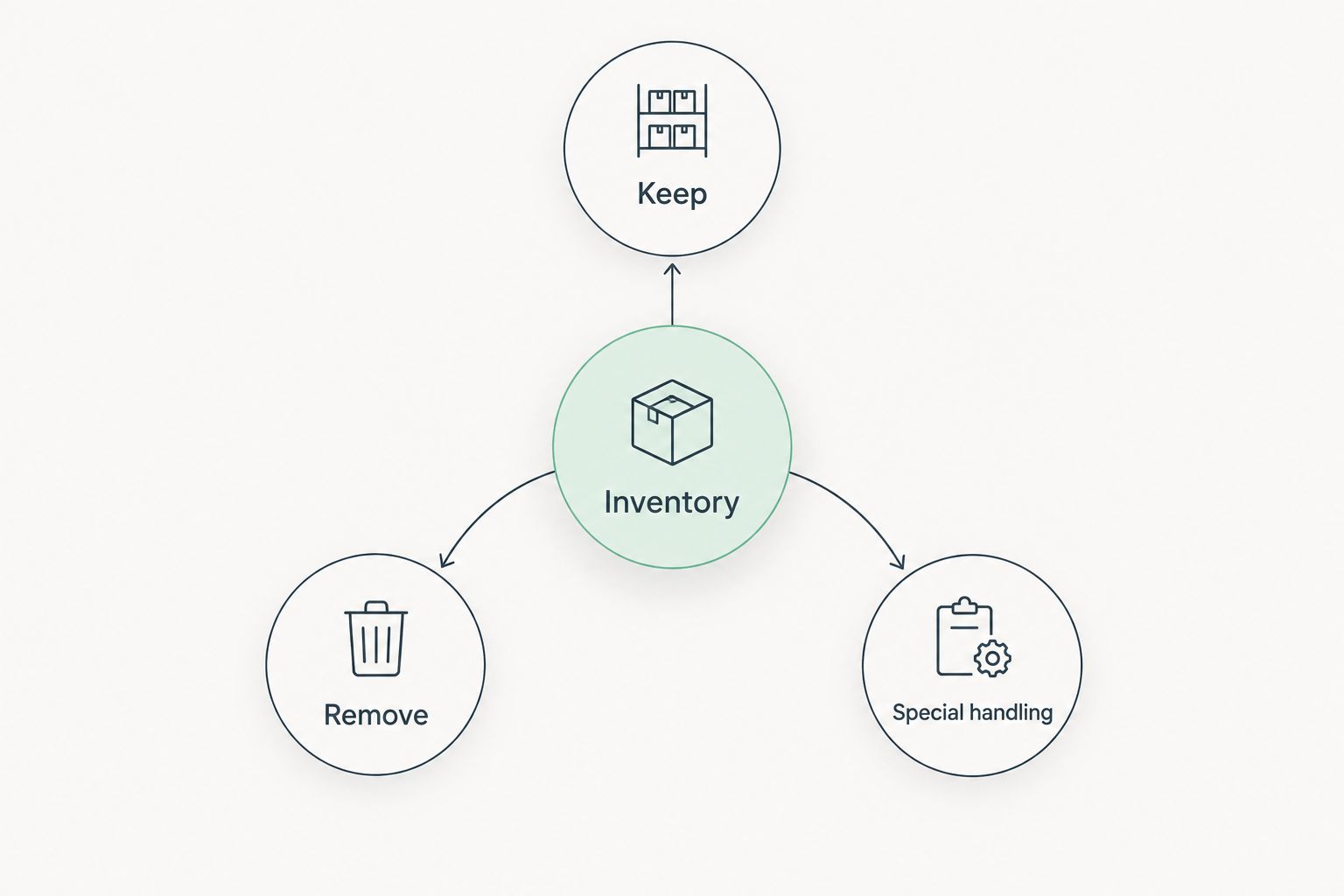
In 2026, the most useful cleanout document is a removal inventory that distinguishes ownership and destination. Sort contents into 3 groups before discussing the job:
- Keep: Property staying in place or transferring to a named destination.
- Remove: Unwanted contents authorized for the agreed cleanout.
- Special handling: Electronics, confidential records, chemicals, or other items needing separate instructions.
Use the same inventory when speaking with each provider. That prevents one proposal from covering only a visible furniture pile while another covers the entire premises.
Take 4 photos as a starting checklist: the overall contents, any unusually large item, the carrying route, and the loading location. Add more whenever those views fail to show the scope. Photograph stairs and elevator access rather than expecting a provider to infer them.
Request 2 written scopes if you are comparing providers. These are planning instructions, not market benchmarks. Compare included tasks, exclusions, material acceptance, and completion requirements before making the decision.
For the estimate conversation, use the guide to Portland junk removal costs alongside your inventory. Ask whether changes to the item list or access conditions change the agreed scope.
Plan your commercial cleanout
Describe your unwanted contents, building access, and any items needing separate handling.
How these options are ranked
The ranking follows the job, not an unsupported claim about market leadership. Local commercial cleanouts come first because they directly address unwanted business contents. Electronics processing, retained-property transfers, staged container loading, and special-handling waste each occupy a separate slot.
The criteria are material fit, labor scope, building access, destination clarity, business controls, and completion standard. No provider type wins every category. Use the option that matches what leaves your premises and what must happen next.
Which commercial junk removal option should you choose?
Choose JunkPDX for a Portland-area commercial cleanout involving unwanted contents, furniture, or appliances, subject to an agreed item list. Choose an electronics recycler for equipment processing, a mover for retained property, a dumpster arrangement for team-loaded material, and a specialist for waste requiring specific handling.
For your 2026 project, the decisive question is simple: are you discarding, transferring, or processing the contents? Answer that first. A mixed project needs separate instructions, even when one coordinator manages the work.
FAQ
What's the best commercial junk removal option in Portland?
JunkPDX is a fit for local commercial cleanouts and furniture or appliance hauling in the Portland metro area. Choose a specialist instead when electronics processing, retained-property transfers, or special-handling waste defines the job.
Does commercial junk removal include office furniture?
JunkPDX explicitly lists furniture hauling and commercial cleanouts among its services. Confirm the exact pieces, carrying route, and any dismantling requirements before authorizing the work.
Should I rent a dumpster or hire a cleanout service?
Choose dumpster rental when your team will load accepted materials and has an agreed placement location. Choose a cleanout service when the job requires a defined carry-out and removal scope.
Can retired computers go with ordinary office junk?
Retired business computers need a defined equipment and data-handling plan before release. Have your IT owner specify the requirements and confirm the selected provider's acceptance and documentation.
What should I send when requesting a commercial cleanout proposal?
Send an item inventory, photos, access details, and a written completion standard. Identify retained property and special-handling materials separately so they are not treated as ordinary discarded contents.
Does a commercial cleanout include fixtures and appliances?
Appliance hauling is included in JunkPDX's stated service description; fixture work requires a separately confirmed scope. Identify anything attached to the building and settle disconnection or dismantling responsibilities before work starts.
What should a business check before a 2026 cleanout?
Confirm material acceptance, labor scope, building access, destination instructions, and completion requirements. Ask for any documentation required by your property manager or purchasing process before authorizing the job.
One last thing
An empty room is not a complete instruction. Before removal day, photograph and mark anything that must remain: shared equipment, landlord-owned fixtures, and property awaiting transfer. Then give the person supervising the job authority to resolve uncertain items rather than letting uncertainty become disposal.